Call us today (732) 230-7552
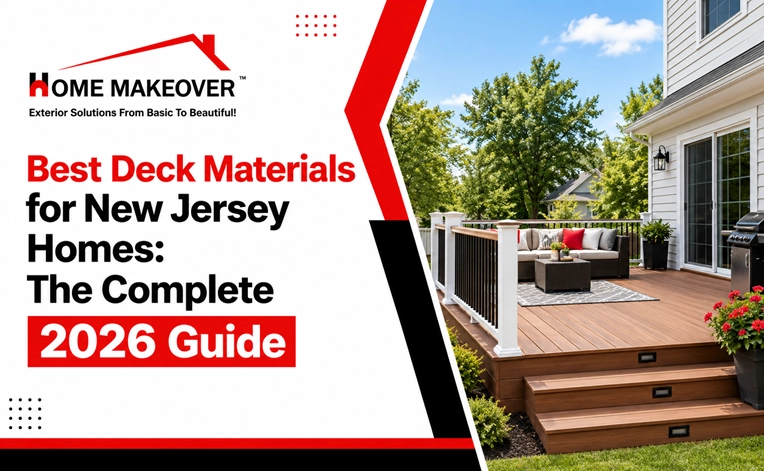
Picking the best deck materials for your home means more than picking a color you like. It means picking something that survives New Jersey’s weather. Our summers get humid enough to warp untreated wood. Our winters freeze and thaw hard enough to crack boards and loosen fasteners. And if you live near the Shore, salt air adds a stress that most national decking guides never mention. At Home Makeover LLC, we replace decks across New Jersey every season, so we’ve seen which materials hold up here and which ones fail early. This guide covers every major decking option for 2026, with real costs, honest trade-offs, and answers to the questions New Jersey homeowners ask us most.
Why New Jersey’s Climate Changes the Decking Equation
Most decking guides are written for a national audience. They treat every backyard the same way. That doesn’t work in New Jersey, where homeowners deal with three stress factors that decks in drier states rarely face:
- Humidity: Summer moisture soaks into any wood that isn’t fully sealed, feeding rot and mold.
- Freeze-thaw cycles: Water trapped in small cracks expands when it freezes, widening the crack a little more with every winter.
- Salt air: Homes near the Jersey Shore see faster fading and surface wear than inland properties.
These three factors deserve more weight than curb appeal when you’re choosing the best deck materials for your property. A deck in Cherry Hill and a deck in Cape May can call for two different materials, even if both homeowners want the exact same look.
Outdoor living space has become one of the most popular home upgrades nationwide. Government data shows more than six in ten homeowners now rank it among their top renovation priorities, and low-maintenance materials like composite and PVC have captured a growing share of that spending.
Comparing the Best Deck Materials for New Jersey Homes
Here’s how the main options stack up before we get into the details of each one.
| Material | Cost per Sq. Ft.(Material Only) | Typical Lifespan | Maintenance | Best For |
|---|---|---|---|---|
| Pressure-treated wood | $3-$6 | 10-15 years | Sealing every year | Tight budgets |
| Cedar & redwood | $4-$8 | 15-20 years with care | Sealing every 1-2 years | Natural wood look |
| Tropical hardwood(ipe, cumaru) | $7-$12 | 40-75 years | Occasional oiling | Long-term, premium budgets |
| Composite(Trex, TimberTech, Fiberon) | $5-$13 | 25-30+ years | Occasional washing | Most NJ homeowners |
| PVC(AZEK, TimberTech Advanced PVC) | $10-$15 | 30-50+ years | Almost none | Shore homes, pools, docks |
These prices cover materials only. Installation labor typically adds another $8 to $20 per square foot, depending on your contractor and deck design.
Pressure-Treated Wood Decking
Pressure-treated wood is pine that’s been chemically treated and forced into a pressure chamber. That process slows down rot and insect damage. It’s the cheapest decking material here, and nearly every lumberyard in New Jersey carries it.
The catch is maintenance. In our humid summers, pressure-treated wood needs sealing or staining every year to keep water out. Skip a year or two, and you’ll see cupping, splitting, and gray, weathered boards. In freeze-thaw winters, water that’s soaked into an unsealed board can crack it from the inside.
Pros:
- Lowest upfront cost of any decking material
- Available almost everywhere in New Jersey
- Can be stained any color you want
Cons:
- Needs yearly sealing to survive NJ humidity
- Shortest realistic lifespan on this list
- Splinters as it ages
Best for: Homeowners who want the lowest install cost and don’t mind an annual maintenance weekend.
Cedar and Natural Hardwood Decking
Cedar and redwood are softwoods with natural resistance to rot and insects, plus a warm, reddish tone many homeowners love. They cost more than pressure-treated wood but need less aggressive upkeep, usually a re-seal every year or two instead of every single year.
Tropical hardwoods like ipe sit at the premium end. Ipe is extremely dense, and well-maintained installations can last 40 to 75 years. It’s also the most expensive option here and one of the hardest to install, since it’s tough enough to dull standard tools.
None of the wood options are naturally suited to salt air. Within a few miles of the Shore, expect faster fading and more frequent resealing than an inland cedar deck would need.
Pros:
- Real wood grain and warmth composite can’t fully copy
- Cedar and redwood resist insects without chemical treatment
- Ipe can outlast almost every material on this list
Cons:
- Requires regular sealing to prevent moisture damage
- Ipe is expensive and difficult to install
- Salt air accelerates wear along the coast
Best for: Homeowners who want a genuine wood look and don’t mind keeping up with sealing.
Composite Decking (Trex, TimberTech, Fiberon)
Composite decking blends recycled wood fibers with plastic, then wraps the board in a protective cap. That cap is a big reason composite ranks among the best deck materials for New Jersey’s climate: it resists moisture, so humidity and freeze-thaw cycles have far less to work with than they do on raw wood.
Most name-brand composite decking today, Trex, TimberTech, and Fiberon included, caps all four sides of the board. Full-cap boards handle NJ’s wet winters and humid summers noticeably better than the uncapped composite sold a decade ago.
Composite costs more upfront than wood, but it skips the yearly staining. Most homeowners just hose it off and wash it a couple of times a year.
Pros:
- No staining or sealing required
- Resists rot, mold, and insects far better than wood
- Wide range of colors and wood-look grain patterns
- Manufacturer warranties often run 25 to 50 years
Cons:
- Higher upfront cost than wood
- Dark colors can get hot underfoot in direct summer sun
- Scratches and stains can’t be sanded out like wood
Best for: New Jersey homeowners who want a long-lasting deck without a yearly maintenance routine, which describes most of the homeowners we work with.
PVC Decking (AZEK, TimberTech Advanced PVC)
PVC decking skips wood fiber entirely. It’s built from polymer through and through, which makes it the most water-resistant material on this list. With no organic material in the board, PVC can’t rot, and mold has almost nothing to feed on.
That makes PVC a strong pick for the properties that need it most: homes within sight of the water, decks near a pool, and yards where standing water is a regular concern. Coastal towns from Long Beach Island to Sea Bright see the biggest benefit from PVC’s moisture resistance.
The trade-off is price. PVC typically costs more than composite, and while it’s improved a lot in appearance, some homeowners still feel it looks slightly less like real wood up close than a high-end composite board does.
Pros:
- Completely resistant to moisture, rot, and mold
- Longest warranties available, often up to 50 years
- Stays cooler underfoot than composite in most product lines
- Ideal for docks, pools, and waterfront properties
Cons:
- Highest material cost on this list
- Fewer wood-look textures than composite
- Uses more virgin plastic, which matters to eco-conscious buyers
Best for: Shore-area homeowners and anyone building near a pool, dock, or low-lying yard that holds water.
Best Deck Material for Full Sun
If your deck bakes in direct sun most of the day, heat and UV fading matter more than moisture. Composite and PVC decking both hold their color better than untreated wood, thanks to UV-resistant caps built into the board. Lighter colors also stay cooler underfoot than darker ones, which matters if you plan to walk barefoot on a July afternoon.
Wood can work in full sun too, but only with a UV-rated sealant reapplied every year. Skip that step, and a wood deck in full New Jersey sun will gray and crack within a couple of seasons.
Best Decking Material for Wet Climates (Including the Jersey Shore)
For wet climates, and New Jersey qualifies with its humid summers and coastal storms, PVC decking performs best because it has zero organic material to absorb water. Full-cap composite decking is a close second and a more affordable one. Both outperform wood once you’re dealing with standing water, splash zones near a pool, or salt spray a few blocks from the beach.
Pressure-treated wood and cedar can survive wet conditions, but only with consistent yearly sealing. Miss that maintenance window even once, and moisture damage sets in fast.
Composite vs. PVC: Which Wins for New Jersey Backyards?
This is one of the most common comparisons people ask us to break down. Composite decking, think Trex or TimberTech’s composite lines, gives you a warmer, more natural look and a lower price than PVC. PVC decking, like TimberTech’s Advanced PVC or AZEK, resists moisture even better and tends to stay cooler in direct sun, but it costs more and offers fewer wood-grain textures.
For a typical inland New Jersey backyard, composite usually makes more financial sense. For a waterfront deck, a pool surround, or a property that floods occasionally, the extra cost of PVC is easier to justify because it removes moisture as a long-term risk.
Best Composite Decking Material: Trex vs. TimberTech vs. Fiberon
Trex is the composite decking most homeowners have already heard of, and it’s usually the most budget-friendly entry point into name-brand composite. TimberTech’s composite lines sit a step up in price but offer deeper wood-grain embossing and, in some collections, better heat resistance. Fiberon lands in the middle: solid composite performance without TimberTech’s premium price tag, which is why our team uses it often for New Jersey clients who want capped composite on a moderate budget.
None of the three brands is the best composite decking material for every yard. Trex wins on price and name recognition. TimberTech wins on capping technology and warranty length. Fiberon wins on value.
Deck Wood Types and Cost Breakdown
If you’re set on real wood, here’s how the common species compare:
- Pressure-treated pine: $3-$6 per sq. ft., 10-15-year lifespan, needs yearly sealing
- Cedar: $4-$8 per sq. ft., 15-20 years with care, warm reddish tone, naturally insect-resistant
- Redwood: Priced close to cedar, though it’s grown harder to source in recent years
- Ipe: $7-$12 per sq. ft., 40 to 75-year potential lifespan, hardest to install, most expensive
- Mahogany: Priced between cedar and ipe, dense and attractive, still needs regular oiling
Wood almost always costs less upfront than composite or PVC. Where it loses ground is total cost of ownership. Add up ten or fifteen years of staining supplies and labor, and a pressure-treated deck can end up costing close to what a composite deck would have cost from day one.
Outdoor Deck Material Options Beyond the Big Three
Wood, composite, and PVC cover most New Jersey decks, but a few other outdoor deck material options are worth knowing about:
- Aluminum decking: Virtually maintenance-free and won’t rot, warp, or fade, though it’s less common and pricier than composite.
- Capped vs. uncapped composite: Always ask whether a composite board is capped on all four sides. Uncapped boards cost less but absorb far more moisture, a real problem in New Jersey’s humidity.
- Porcelain pavers over a deck substructure: An emerging option for ground-level decks that want a stone look with excellent water resistance.
For most raised decks in New Jersey, though, the choice still comes down to wood, composite, or PVC.
Our Recommendation for New Jersey Homeowners Heading Into 2026
After building and replacing decks across the state, here’s how we’d narrow it down:
- Tightest budget, willing to maintain it: Pressure-treated wood
- Want a natural wood look with moderate maintenance: Cedar
- Want a wood look with almost no maintenance: Capped composite (Trex, TimberTech, or Fiberon)
- Live near the Shore, a pool, or standing water: PVC decking
- Budget isn’t a limiting factor, and you want maximum lifespan: Ipe or another premium hardwood
For most of the New Jersey homeowners we work with, composite decking hits the best balance of upfront cost, appearance, and durability against our specific climate. That’s part of why composite has been steadily gaining ground on wood across the broader decking market, as more homeowners choose low-maintenance outdoor living space over yearly upkeep.
FAQs
What deck material is most long-lasting?
Tropical hardwoods like ipe can last 40 to 75 years, making them the longest-lasting decking material available. Among lower-maintenance options, PVC decking comes close, with warranties running up to 50 years and no organic material to rot. Composite decking typically lasts 25 to 30-plus years, still far outlasting pressure-treated wood’s 10 to 15-year lifespan.
Which is better, Trex or PVC decking?
Neither is universally better. Trex, a composite, gives you a more natural wood look, a lower price, and strong all-around performance for most yards. PVC decking, like TimberTech Advanced PVC or AZEK, resists moisture even more completely and stays cooler in the sun, which makes it the better choice for docks, pools, and Shore properties. For a typical inland New Jersey deck, Trex usually offers better value.
Which is cheaper, TimberTech or Trex?
Trex is usually the cheaper option at the entry level. Its base composite lines tend to undercut TimberTech’s comparable composite tiers, and TimberTech’s Advanced PVC lines cost more than either brand’s standard composite. If budget is the deciding factor, Trex’s entry-level composite is typically the most affordable name-brand option.
What are the downsides of composite decking?
Composite decking costs more upfront than wood, can get hot underfoot in direct summer sun (especially in darker colors), and can’t be sanded or refinished if it’s scratched or stained, unlike wood. Older or uncapped boards are also more prone to moisture absorption over time, which is why capped composite matters so much in New Jersey’s climate.
What is the best deck material for full sun?
Composite and PVC decking hold color and resist heat damage best in full sun, especially in lighter shades. Wood can handle full sun too, but only with a UV-rated sealant reapplied every year.
What is the best decking material for wet climates?
PVC decking performs best in wet climates because it contains no organic material to absorb moisture. Full-cap composite decking is a close, more affordable second. Wood can work in wet conditions, but it needs consistent yearly sealing to avoid rot.
Choosing the best deck materials for your home comes down to your budget, your maintenance tolerance, and exactly where in New Jersey you live. If you’d like a second opinion on what will actually hold up in your yard, Home Makeover LLC offers free deck consultations for homeowners across the state. We build with wood, composite, and PVC, and we’ll walk you through the real costs before you commit to anything.

About the Author: Jeffrey W. Nero
Jeffrey W. Nero is a home improvement expert with over 20 years of experience serving homeowners in New Jersey. As the owner of Home Makeover™, Jeff combines quality craftsmanship with a deep understanding of local needs. From roofing and siding to deck remodels, Jeff has helped thousands of homeowners bring their visions to life. His commitment to excellence and customer satisfaction makes him a trusted partner in transforming homes across Central NJ.