 Call us today (732) 230-7552

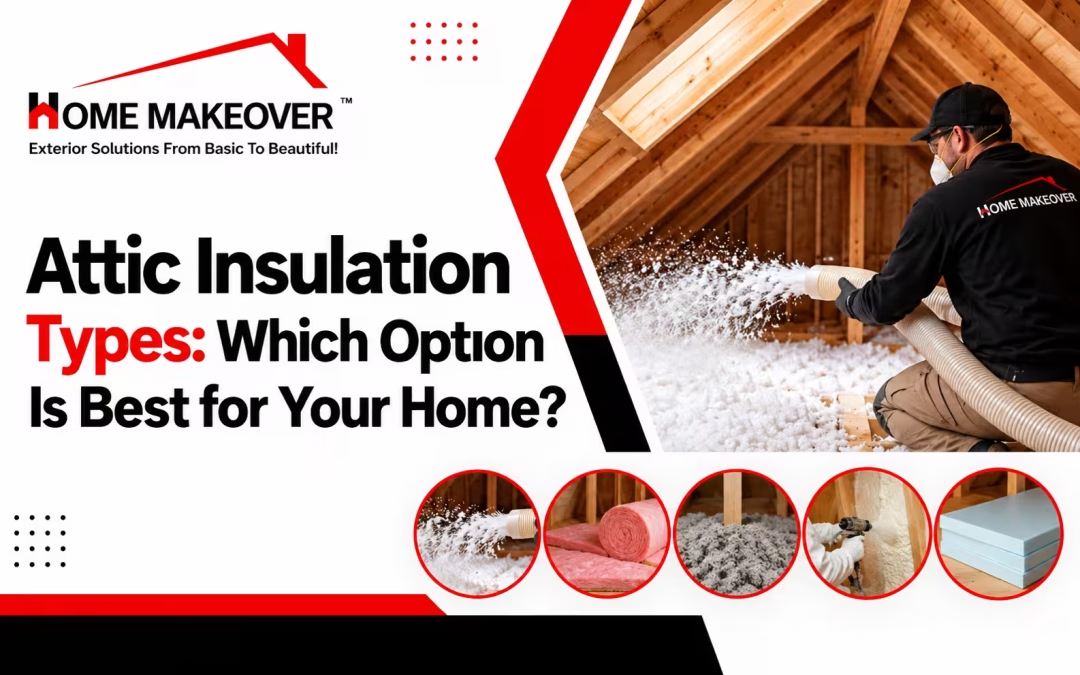
Choosing the right attic insulation starts with understanding how different materials perform and where they work best. New Jersey homes have varying attic designs, from open, unfinished spaces to finished attics with sloped ceilings and narrow cavities. Each design presents different insulation requirements, so a material that works well in one home may not be the most suitable choice for another.
Homeowners can choose from several attic insulation types, including blown-in fiberglass, fiberglass batts and rolls, blown-in cellulose, spray foam, and rigid foam board. These materials differ in their installation methods, coverage, thermal performance, and suitability for different spaces. Understanding these differences can help you make a more informed decision for your property.
What Are the Main Types of Attic Insulation?
Attic insulation materials are designed to slow heat transfer, but they achieve this in different ways. Some materials are loose-fill products that cover broad surfaces, while others come in preformed sections or expand to fill selected cavities.
The five common types discussed below are suitable for different applications. Understanding their characteristics is more useful than choosing a material based on popularity alone.
Blown-In Fiberglass Insulation
Blown-in fiberglass consists of lightweight glass fibers distributed across an attic using specialized equipment. It is particularly useful for covering large attic floor areas and reaching around framing members and other obstacles.
One advantage of blown-in fiberglass is its ability to provide coverage in spaces where preformed insulation sections may be difficult to fit. When installed correctly, it can cover irregular areas and help reduce gaps in the insulation layer.
This material can also be considered when upgrading an existing attic. If the current insulation is clean, dry, and in suitable condition, additional insulation may be installed to improve coverage, subject to compatibility and installation requirements.
Best suited for: Many unfinished attics with broad floor areas, irregular corners, and obstacles that make precise fitting more difficult.
Important consideration: The installed depth and coverage need to be appropriate for the attic. Blown-in material should not block required ventilation pathways or be installed over unresolved moisture problems.
Fiberglass Batts and Rolls
Fiberglass batts and rolls are preformed insulation materials designed to fit between framing members. They are commonly used in accessible cavities with relatively consistent spacing.
Unlike blown-in insulation, batts and rolls are installed in individual sections. This can make them convenient for spaces with regular framing and sufficient access for accurate fitting.
Their performance depends heavily on installation quality. Sections must fit the available cavities without significant gaps, and the material should not be compressed unnecessarily. Poorly fitted insulation can leave areas where heat transfers more readily.
Fiberglass batts and rolls may be less convenient in attics with numerous obstructions, irregular framing, or hard-to-reach corners. In these situations, loose-fill materials may offer more practical coverage.
Best suited for: Accessible attic cavities with regular framing and dimensions that accommodate preformed insulation sections.
Important consideration: Accurate measurements and proper fitting are essential. Homeowners should also consider whether the existing attic layout makes installation practical.
Blown-In Cellulose Insulation
Blown-in cellulose is a loose-fill material generally made from processed paper fibers treated with fire-retardant compounds. It is distributed using specialized equipment and can cover attic floors and suit irregular spaces.
Cellulose is often considered for existing homes because loose-fill installation can accommodate areas where traditional insulation sections are difficult to fit. Its suitability depends on the attic’s construction, required insulation level, and existing conditions.
Moisture management is particularly important. Persistent dampness or roof leaks can compromise insulation and contribute to building problems. Any water intrusion should be corrected before new insulation is installed.
Homeowners should also consider the material’s installed depth, potential settling, and compatibility with existing insulation. The goal is to achieve appropriate coverage and thermal performance rather than simply filling the attic with more material.
Best suited for: Unfinished attics that need loose-fill coverage across broad or irregular floor areas.
Important consideration: Installation must account for moisture conditions, the required insulation level, and the manufacturer’s instructions.
Spray Foam Insulation
Spray foam insulation is applied as a liquid that expands or cures into a foam layer. Depending on the product and installation, it can provide thermal resistance while limiting air leakage through the building envelope.
Spray foam is available in two main forms: open-cell and closed-cell. Although both are used in building insulation, they have different physical properties and moisture characteristics.
Open-Cell Spray Foam
Open-cell spray foam has a lighter, less dense structure. It expands to fill suitable cavities and can help reduce air leakage when installed correctly.
Its relatively lower R-value per inch compared with closed-cell foam means that the available space and required insulation level need to be considered carefully. Its moisture permeability is another important factor when selecting it for a roof or attic assembly.
Closed-Cell Spray Foam
Closed-cell spray foam has a denser structure and generally provides a higher R-value per inch. It also offers greater resistance to water vapor movement than open-cell foam.
However, its use requires careful planning around the roof assembly, moisture management, fire protection, and applicable building requirements. The wrong installation approach can create problems rather than solve them.
Best suited for: Selected attic applications where the building design requires insulation along the roofline or where insulation and air leakage control are both important.
Important consideration: Spray foam requires appropriate product selection and professional installation. It is not automatically the best solution for every attic.
Rigid Foam Board Insulation
Rigid foam board insulation comes in firm panels that can be cut and fitted to appropriate surfaces. Depending on the product and building design, it can be used in roof assemblies, attic knee walls, and other areas requiring a rigid insulation layer.
One advantage is that rigid foam can provide substantial thermal resistance without requiring as much thickness as some other materials. It may also be useful where the construction details call for a continuous insulation layer.
However, rigid panels require careful fitting. Gaps between panels and around edges can reduce overall performance, while moisture management and fire protection requirements depend on the product and installation location.
Rigid foam board is not necessarily the most practical choice for covering a large, open attic floor. Its suitability depends on whether the project involves the roofline, walls, or another specific part of the building envelope.
Best suited for: Selected roof assemblies, attic knee walls, and applications where rigid insulation panels are appropriate.
Important consideration: Panel joints, edges, moisture control, and applicable building requirements must be addressed during installation.
Comparing Attic Insulation Materials
The following comparison summarizes the main differences between the five materials.
| Insulation type | Main advantage | Best application |
|---|---|---|
| Blown-in fiberglass | Covers broad and irregular areas | Many unfinished attic floors |
| Fiberglass batts and rolls | Preformed sections fit regular cavities | Accessible framed spaces |
| Blown-in cellulose | Loose-fill coverage around obstacles | Suitable for unfinished attic floors |
| Spray foam | Can combine insulation with air leakage control | Selected roofline and cavity applications |
| Rigid foam board | Provides a firm insulation layer | Appropriate roof assemblies and attic walls |
There is no single material that works best in every home. The appropriate choice depends on attic geometry, the existing insulation, installation access, moisture conditions, and the performance required.
Which Attic Insulation Type Is Best for Your Home?
The best attic insulation depends on how your attic is constructed and which areas need improvement.
For a large, unfinished attic with an accessible floor, blown-in fiberglass may provide practical coverage around framing and other obstacles. This is one reason Home Makeover LLC offers blown-in fiberglass insulation to New Jersey homeowners.
For an attic with regularly spaced framing and accessible cavities, fiberglass batts and rolls may be appropriate. Blown-in cellulose can also be considered for suitable attic floors where loose-fill coverage is preferred.
Spray foam may be more appropriate for specific roofline applications where insulation and air leakage control need to be considered together. Rigid foam board can be useful in selected roof assemblies and attic walls.
Before selecting a material, consider the condition of your existing insulation, the available installation space, and any moisture concerns. A professional evaluation can help determine which option is suitable for your property, and you can read our guide on attic insulation costs in New Jersey to understand the factors that influence installation costs.
What Should You Check Before Installing Attic Insulation?
Although insulation materials differ, a few basic checks can help prevent installation problems.
Inspect the Existing Insulation
Determine whether the existing insulation is evenly distributed, dry, and in suitable condition. Damaged or contaminated material may require attention before new insulation is added.
Check the Attic Structure
The attic floor, roofline, framing, and access points influence which insulation methods are practical. Finished attics and sloped ceilings may require different approaches from open attic floors.
Consider Ventilation and Moisture
Insulation should not obstruct ventilation pathways in attic assemblies designed to use them. Roof leaks and persistent moisture problems should also be corrected before installation.
Confirm the Required Insulation Level
R-value measures resistance to heat flow. The appropriate insulation level depends on the home’s location, construction, and existing conditions. The material selected should provide the required performance when installed correctly.
Conclusion
Choosing the right attic insulation involves understanding the differences between blown-in fiberglass, fiberglass batts and rolls, blown-in cellulose, spray foam, and rigid foam board. Each material offers specific advantages, but its suitability depends on the attic’s construction, accessibility, moisture conditions, and required thermal performance. Comparing these characteristics helps homeowners make informed decisions rather than choosing insulation based on price or popularity alone.
For New Jersey homeowners considering an attic insulation upgrade, Home Makeover LLC can help identify suitable options based on the property’s needs. A well-planned installation can improve insulation coverage and support a more comfortable home. By selecting an appropriate material and ensuring it is installed correctly, you can make a more informed investment in your home’s long-term performance.
FAQs
What is the most common type of attic insulation?
Blown-in fiberglass, fiberglass batts, and blown-in cellulose are common options for residential attics. The appropriate material depends on the attic’s design and insulation requirements.
Is blown-in fiberglass suitable for older homes?
It can be suitable for many older homes, particularly those with unfinished attics and irregular floor areas. The existing insulation, attic condition, and ventilation arrangements should be evaluated before installation.
Is spray foam better than fiberglass insulation?
Neither material is universally better. Spray foam can provide insulation and air leakage control in suitable applications, while fiberglass can offer practical coverage at a lower installation complexity in many attic floors.
Can different types of attic insulation be combined?
In some situations, compatible insulation materials can be combined to improve coverage or increase the overall insulation level. The existing materials, moisture conditions, and installation requirements should be evaluated first.

About the Author: Jeffrey W. Nero
Jeffrey W. Nero is a home improvement expert with over 20 years of experience serving homeowners in New Jersey. As the owner of Home Makeover™, Jeff combines quality craftsmanship with a deep understanding of local needs. From roofing and siding to deck remodels, Jeff has helped thousands of homeowners bring their visions to life. His commitment to excellence and customer satisfaction makes him a trusted partner in transforming homes across Central NJ.