Call us today (732) 230-7552

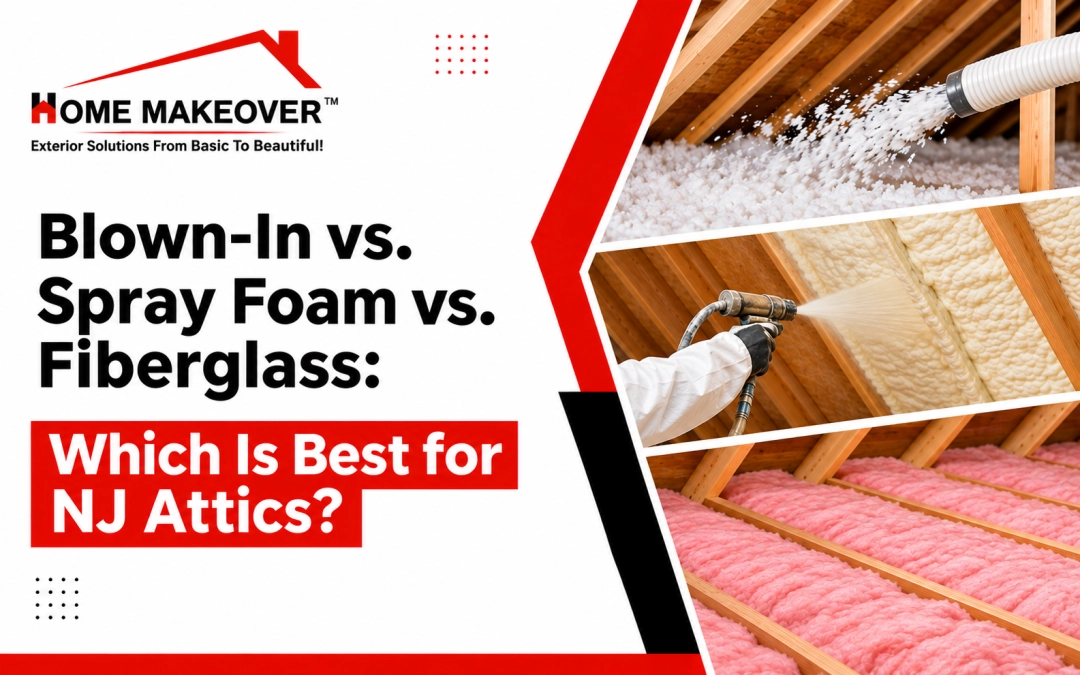
Understanding these differences can help you make a more informed decision before investing in an insulation upgrade. The best option depends on your attic’s existing condition, air leakage, moisture levels, budget, and long-term energy goals. This guide compares the three most common attic insulation types to help you determine which solution makes the most sense for your New Jersey home.
Why Attic Insulation Matters in New Jersey?
Proper attic insulation helps New Jersey homeowners maintain comfortable indoor temperatures and reduce energy costs. In winter, it limits heat loss, while in summer, it helps reduce heat entering living spaces. With New Jersey’s changing seasons and humid summers, effective insulation also supports better home energy performance.
Before choosing insulation, check existing insulation depth, attic ventilation, roof condition, and signs of moisture. Addressing leaks and air gaps first helps improve insulation effectiveness and prevent future problems.
Understanding R-Value and Insulation Performance
R-value measures how well insulation resists heat flow. A higher R-value generally provides greater thermal resistance at the same thickness. However, gaps, compression, and poor installation can reduce performance.
The ideal insulation level for a New Jersey attic depends on the home’s location, construction, and existing conditions. Consider recommended energy standards and professional guidance when selecting the right insulation.
Blown-In Insulation: An Effective Option for Existing Attics
Blown-in insulation consists of loose fibers installed using specialized equipment. Common materials include cellulose and loose-fill fiberglass. The material is distributed across the attic floor or other designated cavities to create a continuous layer of thermal protection.
Benefits of Blown-In Insulation
Blown-in attic insulation is particularly useful for existing homes because installers can distribute it across irregular surfaces and around many obstructions. It can cover joists, fill hard-to-reach spaces, and improve insulation coverage without requiring extensive structural changes.
Cellulose insulation can also provide useful coverage around wiring and other attic features when installed correctly. Loose-fill fiberglass offers another option for homeowners seeking lightweight insulation material.
Additional advantages include:
- Flexible coverage: Loose fibers can fill many irregular spaces and attic layouts.
- Efficient installation: Installation is often relatively quick in accessible attics.
- Thermal improvement: Additional insulation can help reduce heat transfer through the ceiling.
- Adaptability: Existing insulation can sometimes remain in place if it is dry, clean, and in suitable condition.
Limitations of Blown-In Insulation
Blown-in insulation does not automatically stop air movement through gaps and openings. Air sealing around attic penetrations, ceiling fixtures, wiring, and plumbing should be evaluated separately. Appropriate clearance and fire-safety requirements must be followed around heat-producing equipment.
Loose-fill materials can also settle over time, particularly certain cellulose installations, so the installed depth and expected settled R-value should be considered. Insulation that happens to be wet or dirty will need to be stripped off rather than simply putting another coat on top of it.
For many New Jersey homeowners, blown-in insulation is a practical choice when the attic floor is accessible, and the primary goal is improving thermal resistance at a reasonable cost.
Spray Foam Insulation: Air Sealing and Thermal Protection
Spray foam insulation is applied in liquid form, which then expands and hardens to form foam. Two common varieties are open-cell and closed-cell spray foam. Their density, moisture behavior, and insulation performance differ, making the choice of product and installation location important.
Open-cell spray foam is less dense compared to closed-cell spray foam. Closed-cell spray foam is denser and typically provides a higher R-value per inch. Closed-cell products can also resist water vapor more effectively, although their actual performance depends on thickness, formulation, and installation.
Benefits of Spray Foam Insulation
The most significant strength of spray foam is that it seals up numerous holes and cracks along with its thermal resistance capability. This can reduce uncontrolled air leakage when the material is installed as part of a properly designed building envelope.
The spray foam can be found suitable for use in building structures with complicated roof lines and attics. Depending on the design, insulation can be installed along the attic floor or roofline. These approaches create different thermal and ventilation requirements, so the decision should not be based on insulation material alone.
Limitations of Spray Foam Insulation
Spray foam generally costs more upfront than many traditional insulation options. Installation also requires careful preparation, appropriate protective equipment, and adherence to product-specific application and curing requirements.
Poor installation can lead to gaps, inconsistent coverage, or other performance concerns. Some foam products can also affect how a roof assembly manages moisture, particularly when applied to roof sheathing without a suitable ventilation or moisture-control strategy.
Homeowners should ask qualified installers about the product’s specifications, required curing time, ventilation design, fire protection, and compatibility with the existing roof assembly. Spray foam can be an excellent option for certain homes, but it is not automatically the best solution for every NJ attic.
Fiberglass Insulation: A Familiar and Versatile Choice
Fiberglass insulation comprises thin glass fibers made into batts, rolls, or loose fill. Fiberglass batts are commonly installed between ceiling joists, while loose-fill fiberglass can be blown into attic spaces.
Benefits of Fiberglass Insulation
Fiberglass is widely used because it offers dependable thermal resistance when properly selected and installed. Batts can be convenient for accessible, regularly spaced framing, and loose-fill fiberglass can provide more flexible coverage across an attic floor.
Other benefits include its availability in different R-values and its suitability for many conventional attic designs. Fiberglass does not provide a complete air barrier by itself, however, so gaps around penetrations and framing must be addressed separately.
Limitations of Fiberglass Insulation
Fiberglass batts can lose effectiveness when compressed, poorly fitted, or installed with gaps around joists and obstructions. Irregular framing and crowded attic spaces can make achieving consistent coverage difficult.
Fiberglass can also become less effective when wet, and moisture problems should be resolved before new insulation is installed. During installation, fibers can irritate the skin, eyes, and respiratory system, making appropriate protective equipment important.
For homeowners with accessible attics and straightforward framing, fiberglass can offer a practical balance of cost, availability, and thermal performance.
Blown-In vs. Spray Foam vs. Fiberglass: Key Differences
The right insulation depends on what your attic needs most. The following comparison highlights the main differences.
| Feature | Blown-In Insulation | Spray Foam Insulation | Fiberglass Insulation |
|---|---|---|---|
| Air sealing | Requires separate air sealing | Can seal gaps when properly installed | Requires separate air sealing |
| Installation | Blown into designated spaces | Sprayed onto approved surfaces | Installed as batts, rolls, or loose fill |
| Cost | Generally low to moderate | Generally higher | Generally low to moderate |
| Irregular spaces | Excellent coverage potential | Conforms to many surfaces | Batts may be difficult to fit |
| R-value | Depends on material and depth | Depends on foam type and thickness | Depends on product and thickness |
| Best suited for | Many existing attic floors | Specific air-sealing and roofline applications | Accessible attics with suitable framing |
Which Attic Insulation Is Best for NJ Homeowners?
There is no single winner for every New Jersey home. Blown-in insulation is often a strong option when homeowners want to improve insulation coverage across an existing attic floor. It can be especially practical when the existing insulation is insufficient, but the attic structure is otherwise in good condition.
Spray foam may be worth considering when uncontrolled air leakage is a significant concern or when the attic’s design calls for insulation along the roofline. Because this approach can change the attic’s ventilation and moisture behavior, professional evaluation is particularly important.
Fiberglass is a reasonable choice for accessible attics with conventional framing and relatively few obstructions. It can deliver effective thermal performance when installed at the correct thickness without compression or gaps.
Your decision should also account for your budget, future renovation plans, existing roof ventilation, and whether the attic is intended to remain vented or become part of a conditioned space. A qualified assessment can help determine which combination of air sealing, insulation, and ventilation improvements offers the greatest value.
Common Attic Insulation Mistakes to Avoid
Even high-quality insulation may underperform when installation problems are overlooked. Avoid these common mistakes:
- Installing new insulation over wet, mold-contaminated, or damaged materials without addressing the underlying issue.
- Ignoring air leaks around plumbing penetrations, attic hatches, and wiring.
- Blocking soffit vents or other required ventilation pathways with insulation.
- Compressing fiberglass batts or leaving uncovered sections of the attic floor.
- Choosing spray foam without evaluating roof assembly design and moisture control.
It is also important to consider combustion safety around fuel-burning appliances, safe access to electrical equipment, and required clearances around chimneys and other heat sources. These details should be reviewed before installation begins.
Conclusion
Blown-in, spray foam, and fiberglass insulation can all improve attic performance when the material is appropriate for the space and installed correctly. Blown-in insulation is often a practical choice for improving coverage across existing attic floors, spray foam can combine insulation with air sealing in suitable assemblies, and fiberglass offers versatile options for conventional attic layouts. For New Jersey homeowners, the best solution depends on the home’s construction, air leakage, moisture conditions, and energy-efficiency priorities.
Before investing in attic insulation, address existing leaks, evaluate ventilation, and determine the appropriate insulation level for your home. Home Makeover LLC can help you understand the available options and plan improvements around your property’s needs. With the right approach, you can make a well-informed investment in indoor comfort, energy performance, and long-term home efficiency.

About the Author: Jeffrey W. Nero
Jeffrey W. Nero is a home improvement expert with over 20 years of experience serving homeowners in New Jersey. As the owner of Home Makeover™, Jeff combines quality craftsmanship with a deep understanding of local needs. From roofing and siding to deck remodels, Jeff has helped thousands of homeowners bring their visions to life. His commitment to excellence and customer satisfaction makes him a trusted partner in transforming homes across Central NJ.