Call us today (732) 230-7552
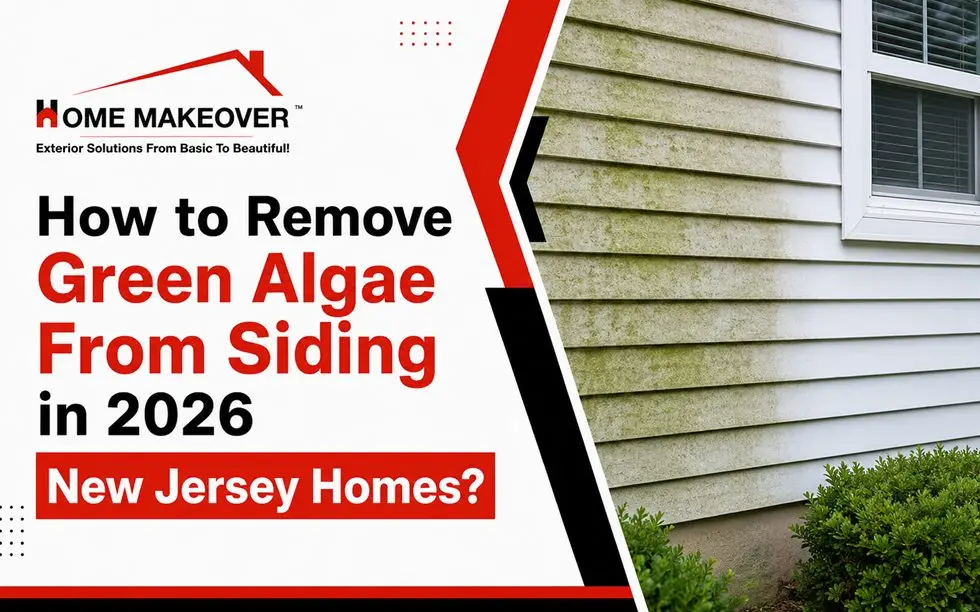
Green algae on siding is one of the most common exterior problems for homeowners across New Jersey. It starts as a few light green spots. Then slowly, entire walls begin to look dirty, stained, and neglected.
Many homeowners notice algae growth after humid summers, heavy rain, or long winters with little sunlight. Homes near trees, shaded areas, or coastal regions often experience the problem faster.
If you are searching for how to remove green algae from siding, this complete guide explains everything homeowners need to know in 2026. You will learn what causes algae, how to clean it safely, mistakes to avoid, prevention methods, and when siding replacement may become necessary.
This guide is written specifically for New Jersey homeowners dealing with algae on vinyl, fiber cement, wood, and composite siding.
Why Green Algae Grows on Siding in New Jersey?
New Jersey’s weather creates the perfect environment for algae growth.
Several conditions contribute to the problem:
- High humidity
- Coastal moisture exposure
- Heavy rainfall
- Tree shade
- Poor drainage
- Dirty siding surfaces
- Lack of sunlight
- Pollen buildup
Algae thrive in damp environments. North-facing walls often stay wet longer because they receive less sunlight during the day.
Homes near the Jersey Shore usually experience algae faster due to salt air and higher moisture levels.
Older siding also becomes more vulnerable because the surface texture traps dirt and organic debris over time.
What Does Green Algae on Siding Look Like?
Many homeowners mistake algae for mold or mildew.
Green algae usually appear as:
- Light green streaks
- Dark green patches
- Slimy surface buildup
- Vertical stains
- Faded green discoloration
It often begins near gutters, under rooflines, or behind bushes where moisture remains trapped.
Over time, algae spread across larger areas if not cleaned properly.
Why You Should Remove Green Algae Quickly?
Ignoring algae can create bigger problems later.
Here is why fast cleaning matters:
Prevents Permanent Stains
Algae can discolor siding permanently if left untreated for months or years.
Protects Siding Materials
Moisture buildup weakens exterior materials over time.
Improves Curb Appeal
Green streaks make homes look older and poorly maintained.
Helps Prevent Mold Growth
Algae create damp conditions that may encourage mold or mildew.
Reduces Moisture Damage
Wet siding can eventually affect insulation and wall structures.
A quick inspection can identify whether algae cleaning or siding replacement is the better long-term solution.
How to Remove Green Algae From Siding Safely?
Homeowners often rush into pressure washing without understanding the risks. High pressure can crack vinyl panels, loosen seams, or force water behind the siding.
The safest method combines gentle cleaning solutions with soft washing techniques.
Step 1: Inspect the Siding First
Before cleaning, check for:
- Cracks
- Loose panels
- Warped boards
- Missing caulk
- Water damage
- Soft spots
- Mold growth
Cleaning damaged siding aggressively can make the problem worse.
Step 2: Gather the Right Cleaning Supplies
You will need:
- Garden hose
- Soft brush
- Bucket
- Protective gloves
- Safety glasses
- Pump sprayer
- Mild siding cleaner
- White vinegar or oxygen bleach
Avoid using harsh chemicals that can damage landscaping or siding finishes.
Step 3: Protect Nearby Plants
Wet nearby grass, flowers, and shrubs before cleaning.
Cover delicate plants if needed.
This reduces chemical exposure and protects landscaping.
Step 4: Rinse the Siding
Use a garden hose to remove loose dirt and debris first.
Never spray upward beneath the siding panels because water can enter behind the wall system.
Step 5: Apply the Cleaning Solution
Spray the cleaning mixture evenly across the algae-covered areas.
Let it dwell for 10 to 15 minutes.
This helps loosen algae from the surface.
Step 6: Scrub Gently
Use a soft-bristle brush to clean stubborn areas.
Avoid aggressive scrubbing because it may scratch vinyl or painted finishes.
Step 7: Rinse Thoroughly
Wash away all cleaning residue completely.
Leftover chemicals may leave streaks or damage siding surfaces over time.
Best Homemade Cleaning Solution for Green Algae
Many homeowners prefer affordable DIY cleaning methods.
One popular solution includes:
- 70% water
- 30% white vinegar
This mixture works well for mild algae growth.
For tougher buildup, oxygen bleach can provide stronger cleaning without damaging most siding materials.
Never mix bleach with ammonia or other chemicals.
Professional siding cleaning helps remove stubborn algae safely without damaging your home exterior.
Can Pressure Washing Remove Green Algae?
Yes, but pressure washing must be done carefully.
Improper pressure washing is one of the biggest reasons siding becomes damaged.
Risks of High-Pressure Washing
- Cracked vinyl panels
- Water intrusion
- Loose siding
- Paint damage
- Broken seals
- Mold growth inside the walls
Soft washing is usually safer for residential siding in New Jersey homes.
Professional cleaners often use lower pressure with specialized cleaning solutions.
How to Remove Algae From Vinyl Siding?
Vinyl siding is common across New Jersey because it is durable and low-maintenance. However, algae still grow on vinyl surfaces exposed to moisture and shade.
Homeowners searching for how to remove algae from vinyl siding should focus on gentle cleaning methods.
Vinyl can crack if excessive force is used during scrubbing or pressure washing.
Tips for Cleaning Vinyl Siding Safely
- Use soft brushes only
- Avoid metal scrapers
- Rinse thoroughly
- Never use acetone or paint thinner
- Clean during cooler temperatures
- Test cleaners on small areas first
Common Areas Where Algae Grow Fastest
Some areas of your home are especially prone to wear and damage.
North-Facing Walls
These areas receive less sunlight and stay damp longer.
Under Gutters
Overflowing gutters create constant moisture exposure.
Near Trees and Bushes
Plants trap humidity around siding surfaces.
Coastal Homes
Salt air increases moisture retention.
Around Downspouts
Water splashback creates algae-friendly conditions.
Why New Jersey Homes Get More Algae Problems?
New Jersey’s climate creates ideal conditions for algae growth year-round.
Several local factors contribute:
- Coastal humidity
- Seasonal storms
- Snow accumulation
- Tree-heavy neighborhoods
- Warm summers
- High rainfall
Homes in Monmouth County, Ocean County, and areas near the Jersey Shore often experience algae buildup earlier than inland properties.
How to Clean Algae Off House Siding Without Damage?
Homeowners researching how to clean algae off house siding often focus only on removing stains.
However, protecting the siding matters just as much.
Safe Cleaning Practices
- Start with low-pressure rinsing
- Use non-abrasive cleaners
- Avoid wire brushes
- Never spray upward
- Clean from top to bottom carefully
- Allow proper drying time
Even minor mistakes today can result in costly repairs down the road.
A siding evaluation helps identify hidden moisture problems before algae cause structural damage.
Signs the Problem Is More Than Surface Algae
Sometimes algae indicate deeper issues.
Watch for:
- Bubbling siding
- Soft wall sections
- Interior moisture stains
- Mold smell indoors
- Warped siding panels
- Peeling paint nearby
- Rising energy bills
These signs may indicate trapped moisture inside the wall system.
How Often Should You Clean Siding in New Jersey?
Most homes benefit from exterior siding cleaning every 12 to 24 months.
Homes near trees or coastal areas may need annual cleaning.
Regular maintenance helps prevent:
- Deep staining
- Moisture damage
- Premature siding aging
- Mold development
Preventive cleaning costs far less than siding replacement.
How to Prevent Green Algae From Returning?
Removing algae is only part of the solution.
Prevention matters just as much.
Trim Nearby Trees
Allow more sunlight and airflow around the home.
Clean Gutters Regularly
Overflowing gutters keep siding wet for long periods.
Improve Drainage
Redirect water away from the home foundation.
Wash Siding Periodically
Light cleaning prevents algae buildup from becoming severe.
Remove Debris Quickly
Leaves and dirt trap moisture against siding surfaces.
Inspect After Storms
Heavy rain and wind may create new moisture problems.
How to Remove Green Algae From Vinyl Siding Without Fading Color?
Many homeowners worry about discoloration during cleaning.
The safest approach includes:
- Using diluted cleaners
- Avoiding strong bleach concentrations
- Cleaning during cooler weather
- Rinsing immediately
- Avoiding direct sunlight during washing
This helps preserve siding color and finish.
The Difference Between Algae, Mold, and Mildew
These problems look similar but behave differently.
Algae
- Usually green
- Grows on damp surfaces
- Common outdoors
Mold
- Black or dark colored
- Fuzzy appearance
- May spread indoors
Mildew
- Gray or white
- Powdery texture
- Often found in shaded areas
Professional inspections help identify the exact problem.
Why DIY Siding Cleaning Sometimes Fails?
Many homeowners clean algae only to see it return quickly.
Common mistakes include:
- Using the wrong cleaners
- Ignoring moisture sources
- Damaging protective siding coatings
- Incomplete rinsing
- Cleaning only visible areas
- Missing hidden algae behind bushes
Temporary cleaning does not solve the root cause if moisture problems continue.
Professional siding experts can determine whether your siding needs cleaning, repair, or full replacement.
When Siding Replacement Becomes Necessary?
Sometimes algae damage goes beyond simple cleaning.
Replacement may be the better option if:
- Siding is cracked
- Panels are warped
- Moisture exists behind walls
- Mold damage is extensive
- Insulation is affected
- The siding is over 20 years old
- Energy efficiency is poor
Modern siding materials resist algae better and improve long-term durability.
Best Siding Materials for Moisture Resistance in 2026
Homeowners upgrading siding in 2026 often choose materials designed for improved moisture resistance.
Fiber Cement Siding
- Durable
- Weather resistant
- Strong against moisture
Modern Vinyl Siding
- Low maintenance
- Affordable
- Improved UV protection
Engineered Wood Siding
- Better moisture resistance than traditional wood
- Attractive appearance
Composite Siding
- Long-lasting
- Resistant to humidity and algae growth
How Does Coastal New Jersey Weather Affect Siding?
Homes near the coast face additional challenges.
Salt air increases:
- Surface moisture
- Corrosion
- Dirt buildup
- Organic growth
Frequent storms also increase siding exposure to water and debris.
This is why coastal homeowners often experience algae growth sooner than inland properties.
Eco-Friendly Ways to Clean Green Algae
Many homeowners prefer environmentally safe cleaning methods.
Safer options include:
- White vinegar
- Oxygen bleach
- Biodegradable cleaners
- Soft washing systems
These methods reduce environmental impact while still removing algae effectively.
How to Clean Algae From Vinyl Siding Near Landscaping?
Plants can complicate siding cleaning.
To protect landscaping:
- Water plants before cleaning
- Cover delicate flowers
- Avoid overspray
- Rinse plants afterward
Proper preparation prevents chemical damage to your yard.
Why Some Homes Get Algae Faster Than Others?
Not all homes experience algae equally.
Factors include:
- Roof drainage design
- Tree coverage
- Sun exposure
- Siding age
- Nearby water sources
- Air circulation
Even neighboring homes may experience very different algae growth patterns.
A professional inspection can identify hidden siding damage before moisture problems become expensive repairs.
Can Algae Lower Home Value?
Yes.
Visible algae growth reduces curb appeal and may concern potential buyers.
Buyers often associate green stains with:
- Poor maintenance
- Hidden moisture issues
- Mold concerns
- Aging siding
Keeping siding clean helps maintain property value and appearance.
What Homeowners Should Never Do?
Avoid these common mistakes:
Do Not Use Wire Brushes
They scratch siding surfaces permanently.
Do Not Use High-Pressure Close-Up
This forces water behind siding panels.
Do Not Ignore Cracks
Cleaning damaged siding may worsen moisture intrusion.
Do Not Mix Chemicals
Unsafe combinations can create dangerous fumes.
Do Not Delay Cleaning for Years
Older stains become harder to remove completely.
2026 Siding Maintenance Trends in New Jersey
Homeowners are becoming more proactive about exterior maintenance.
Popular trends include:
- Annual soft washing
- Moisture-resistant siding upgrades
- Energy-efficient exterior renovations
- Preventive inspections
- Low-maintenance siding materials
More homeowners now view siding maintenance as protection against long-term repair costs.
How to Remove Algae From Outside Walls Safely?
Many homeowners also search for how to remove algae from outside walls when algae spreads beyond siding surfaces.
The same gentle cleaning principles apply:
- Use mild cleaners
- Avoid excessive pressure
- Rinse thoroughly
- Address moisture problems quickly
Different exterior materials may require different cleaning methods.
FAQs
What is the green stuff on my siding?
The green film is usually algae growing on moisture, pollen, dirt, and other organic residue. It appears fastest on shaded walls that dry slowly. In New Jersey, humidity, rainfall, tree cover, and coastal moisture make these conditions especially common.
What kills algae on vinyl siding?
A siding-safe cleaner designed for organic growth can kill algae effectively. Diluted sodium hypochlorite is commonly used professionally, while mild detergent, oxygen bleach, or manufacturer-approved cleaners may suit lighter growth. Always test the cleaner first and follow the siding manufacturer’s instructions.
Can you pressure wash vinyl siding?
Yes, but excessive pressure or spraying upward into panel seams can force water behind the siding and cause damage. A gentler washing method is usually safer. When pressure equipment is used, keep the spray directed downward and follow the siding manufacturer’s recommendations.
Is soft washing safe for vinyl siding?
Soft washing is generally suitable for vinyl siding because it relies on cleaning solution and low water pressure rather than aggressive force. It reduces the risk of cracked panels and water intrusion while effectively removing algae, mildew, and other organic buildup from exterior surfaces.
Can green algae damage vinyl siding?
Algae is often primarily a surface appearance problem, but recurring growth can indicate persistent moisture around the exterior. Long term damp conditions may contribute to staining or reveal drainage, gutter, ventilation, or siding problems that should be investigated rather than repeatedly cleaned.
Why does algae keep coming back after I clean my siding?
Algae usually returns because the moisture conditions supporting it remain unchanged. Shade, nearby trees, overflowing gutters, sprinklers, poor airflow, and slow drying encourage regrowth. New Jersey homes with humid summers or coastal exposure may need more frequent maintenance and moisture control.
Should I replace my siding if cleaning does not remove the stains?
Not automatically. Remaining discoloration may be staining, fading, or oxidation rather than active algae. Replacement becomes more relevant when siding is also cracked, warped, loose, deteriorated, or affected by underlying moisture. Persistent staining should be evaluated before additional aggressive cleaning is attempted.
Final Thoughts
Learning how to remove green algae from siding properly can help New Jersey homeowners protect their home’s appearance, value, and structural integrity.
The key is to act early, before moisture and staining become severe.
Safe cleaning methods, regular maintenance, and moisture prevention all play a major role in keeping siding clean in 2026.
While many algae problems can be cleaned successfully, older or damaged siding may eventually require replacement for long-term protection and energy efficiency.
If your siding is cracked, faded, warped, or heavily damaged by moisture, contact Home Makeover LLC for professional siding replacement services in New Jersey.

About the Author: Jeffrey W. Nero
Jeffrey W. Nero is a home improvement expert with over 20 years of experience serving homeowners in New Jersey. As the owner of Home Makeover™, Jeff combines quality craftsmanship with a deep understanding of local needs. From roofing and siding to deck remodels, Jeff has helped thousands of homeowners bring their visions to life. His commitment to excellence and customer satisfaction makes him a trusted partner in transforming homes across Central NJ.