 Call us today (732) 230-7552
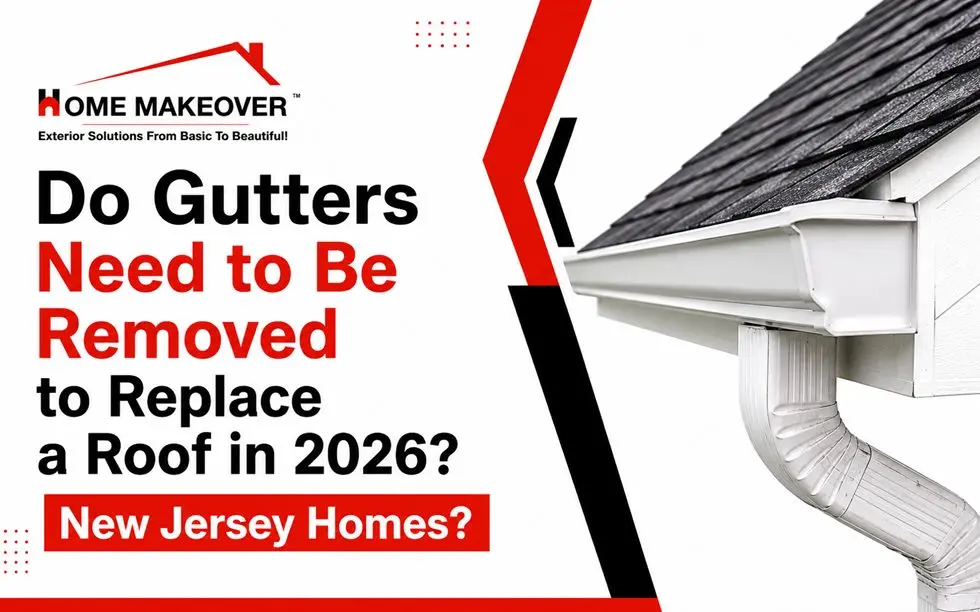
When it’s time to replace your roof, one of the most common questions homeowners ask is: Do gutters need to be removed to replace a roof in 2026? It’s a smart question because gutters and roofing work hand in hand to protect your home. Replacing one without understanding how it affects the other can lead to mistakes, unnecessary expenses, or even long-term damage.
In this guide, we’ll walk you through everything you need to know, from whether gutters should be removed to how roofing contractors usually handle the process and what you can do to protect your home.
Why Gutters Matter During Roof Replacement?
Your roof sheds water, and your gutters carry it safely away from your home’s foundation. If either system isn’t working correctly, water damage becomes a serious concern. This is why roofing professionals often assess both the roof and gutters together during a replacement project.
Gutters are typically attached to the fascia boards just under the roofline. When new shingles, flashing, or drip edges are installed, contractors often work very close to the gutter system. That’s where the question arises: do gutters need to be removed to replace a roof, or can they stay in place?
Do Gutters Always Need to Be Removed?
The short answer is no, gutters don’t always need to be removed to replace a roof. In many cases, skilled roofing contractors can replace shingles, flashing, and other materials without disturbing your gutters. However, there are exceptions.
Here’s when gutters may need to come off:
- Damaged or Old Gutters – If your gutters are already rusted, sagging, or leaking, it’s often cost-effective to replace them during a roof project.
- Improper Installation – Gutters that were nailed or fastened incorrectly may block roof edge access, making removal the safer option.
- Full Roof Deck Replacement – If your roof needs structural repairs beyond shingles, removing gutters may be necessary.
- Tight Clearance – On some homes, the gap between the roof edge and gutters is too small for safe work without taking them down.
How Professionals Handle Roof Replacement Around Gutters?
Professional roofing contractors use protective measures to keep gutters safe during a roof replacement. Some common methods include:
- Using Ladder Standoffs: Instead of leaning ladders directly on gutters, standoffs distribute weight and prevent bending.
- Installing Drip Edge Carefully: Roofers slide the new drip edge under shingles and above the gutter without detaching the system.
- Covering Gutters During Work: Tarping or shielding gutters prevents falling debris from scratching or denting them.
This means that, in most cases, contractors can work around your gutters and save you from unnecessary removal costs.
Pros and Cons of Removing Gutters During Roof Replacement
If you’re still wondering whether gutters should come down during your project, here are some pros and cons to weigh:
Pros:
- Easier access for roofers.
- Opportunity to replace old or faulty gutters.
- Cleaner installation of drip edges and flashing.
Cons:
- Added labor costs for removal and reinstallation.
- Higher risk of gutter misalignment if reinstalled incorrectly.
- Longer overall project time.
For most homeowners, the decision comes down to the current condition of the gutters. If they’re working well, leaving them in place is usually best.
Tips for Homeowners Before Roof Replacement
To avoid surprises, here are a few things you can do before hiring a contractor:
- Inspect Your Gutters – Look for cracks, sagging, or leaks. If they’re in bad shape, consider replacing them along with the roof.
- Ask Your Roofer in Advance – Not all companies follow the same process, so confirm whether they plan to remove gutters.
- Request Protection Measures – Ensure your contractor uses ladders, tarps, and shields to prevent gutter damage.
- Plan for Upgrades – If you’ve been considering seamless gutters or gutter guards, a roof replacement is the perfect time to upgrade.
FAQs
Do gutters need to be removed to replace a roof?
In most cases, gutters don’t need full removal. However, they may be temporarily detached to ensure proper drip edge installation.
Will roofers damage my gutters during a roof replacement?
Professional roofers take precautions like using tarps and ladder standoffs to prevent damage. At Home Makeover LLC, gutter protection is a standard part of our roof replacement process in Monmouth County, NJ.
Is it a good idea to replace gutters when replacing a roof?
If your gutters are over 15-20 years old, sagging, cracked, or showing open seams, replacing them alongside your roof is the most cost-effective approach. Bundling both projects with one contractor saves labor costs and ensures the new gutter system integrates properly with the new roof and drip edge.
What is the “detach and reset” method for gutters during a roof replacement?
Detach and reset is a process where the roofing crew carefully removes the gutters during tear-off, installs the new drip edge and shingles, then re-secures the gutters in the correct position.
Can a drip edge be installed without removing gutters?
It is technically possible but not recommended. Leaving gutters fully in place makes it difficult to slide the drip edge flashing behind the gutter properly, which can cause water to run behind the gutter and rot the fascia board over time.
How does a roof replacement affect gutters attached to the fascia board?
Gutters on fascia boards are less disruptive, but they may still need temporary removal if repairs are required. The fascia is also inspected for damage during the process.
What happens to gutters during the tear-off phase of a roof replacement?
During the shingle tear-off phase, old roofing debris can fall into open gutters and cause clogs if they aren’t covered.
Is it more cost-effective to replace gutters and a roof at the same time in New Jersey?
Yes, combining a roof replacement and gutter replacement in New Jersey into a single project typically reduces overall labor costs by 10–20% compared to scheduling them separately. It also eliminates the risk of a future gutter installation crew accidentally damaging a brand-new roof.
What signs indicate my gutters should be replaced when I replace my roof?
Signs include sagging, cracks, rust, leaks, or age over 15 years. These issues suggest it’s time for replacement. Our roofing team inspects your gutter system during every free roof estimate in Monmouth, Middlesex, and Mercer Counties.
Will my roofer clean my gutters after the roof replacement is done?
A reputable roof replacement contractor will clear construction debris from your gutters as part of the final cleanup, including old shingle granules and nails that accumulated during the tear-off. However, this is not the same as a full gutter cleaning service.
The Bottom Line: Do Gutters Need to Be Removed to Replace a Roof in 2026?
So, do gutters need to be removed to replace a roof? In most cases, the answer is no; professional contractors can usually work around them with the right tools and techniques. However, if your gutters are damaged, improperly installed, or blocking access, removal may be the smarter option.
When planning a roofing project, the key is to evaluate the condition of your gutters before starting. This ensures you avoid unexpected costs and make the most of your investment.
If you’re looking for trusted experts who can guide you through both roof and gutter replacement with ease, hiring trusted exterior home remodeling professionals from Home Makeover is the best choice.

About the Author: Jeffrey W. Nero
Jeffrey W. Nero is a home improvement expert with over 20 years of experience serving homeowners in New Jersey. As the owner of Home Makeover™, Jeff combines quality craftsmanship with a deep understanding of local needs. From roofing and siding to deck remodels, Jeff has helped thousands of homeowners bring their visions to life. His commitment to excellence and customer satisfaction makes him a trusted partner in transforming homes across Central NJ.