Call us today (732) 230-7552
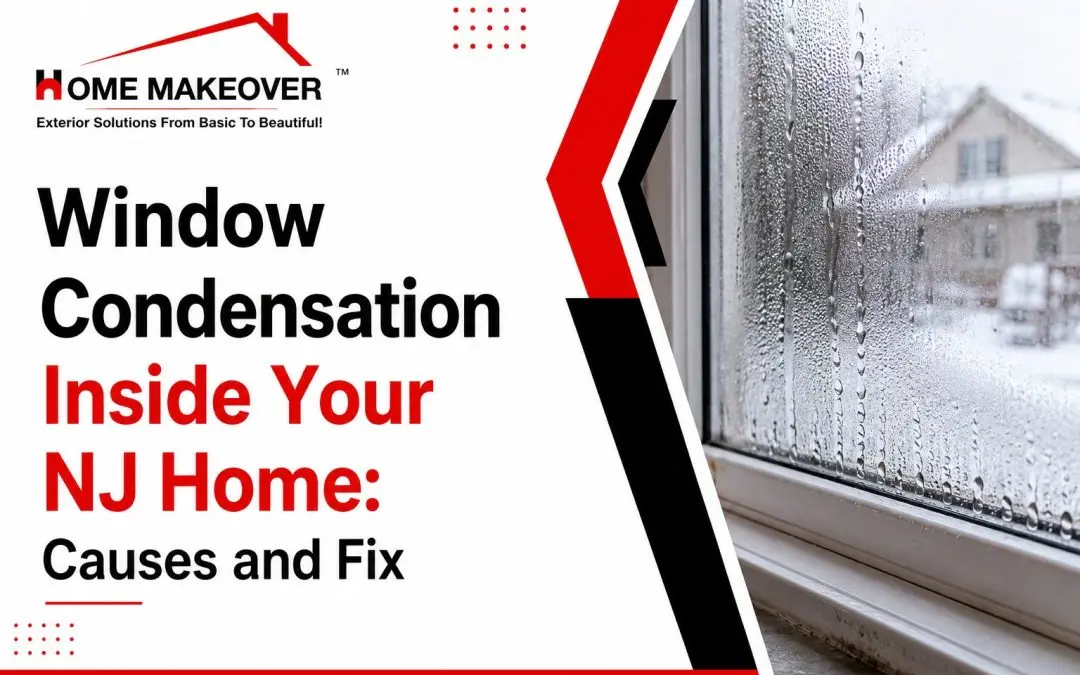
Window condensation inside house is one of the most misunderstood problems NJ homeowners deal with. Some moisture on your windows is completely normal. But when it keeps coming back, builds up heavily, or appears between the glass panes, it is telling you something important about your home.
The cause is not always the window itself. High indoor humidity, poor ventilation, and failed window seals can all produce condensation. Getting the diagnosis right determines whether you need a $20 fix or a full window replacement.
This guide explains exactly what causes window condensation inside your home, how to tell which type you are dealing with, and what NJ homeowners can do to fix it for good.
How Condensation Forms on Your Windows at Home?
When warm, moist indoor air travels toward a cold window surface, the temperature drop forces the air to release its moisture as water droplets on the glass. Think of it the same way a cold drink sweats on a hot day. The bigger the difference between your indoor temperature and the glass surface temperature, the more condensation you get.
In NJ homes, this happens most often in winter when indoor heating is running, and outdoor temperatures drop. The glass surface is cold enough to trigger condensation from the warm, humid air inside the home.
| NJ Tip: New Jersey’s humid summers and cold winters create ideal conditions for window condensation year-round. Interior condensation peaks in December through February. If your windows are sweating heavily during those months, indoor humidity is almost certainly above 40 percent. |
The 3 Types of Window Condensation: Which One Do You Have?
Not all condensation is the same. The location of the moisture tells you exactly what is causing it and how serious the problem is.
| Type | Where It Appears | Cause | Fix Required |
|---|---|---|---|
| Interior condensation | On the inside surface of the glass | High indoor humidity or poor ventilation | Humidity control, ventilation |
| Between-pane condensation | Trapped between the glass layers | Failed insulated glass unit seal | Window replacement |
| Exterior condensation | On the outside surface of the glass | Outdoor humidity and temperature change | No fix needed - normal |
This blog focuses on interior condensation and between-pane condensation. Exterior condensation is a sign that your windows are insulating well and is not a concern.
6 Causes of Window Condensation Inside Your House
1. High Indoor Humidity
This is the most common cause. The ideal indoor humidity level for NJ homes in winter is between 30 and 40 percent. Above 40 percent, moisture finds the coldest surface in the room, which is almost always the glass, and condenses there.
Every day activities drive humidity higher than most homeowners realize. Cooking, showering, running the dishwasher, and even breathing all add moisture to the air.
| Quick Fix: Buy a hygrometer to measure your indoor humidity. They cost $10 to $20 at most hardware stores. If your reading is consistently above 45 percent, a dehumidifier will reduce condensation significantly. |
2. Poor Ventilation
A home that does not breathe properly traps moisture inside. Many NJ homes built after 2000 were constructed with tight seals to improve energy efficiency. While that keeps utility bills lower, it also means indoor moisture from everyday activities builds up faster than in older, draftier homes. Without proper ventilation, that trapped humidity finds the coldest surface in the room, which is almost always the glass.
Bathrooms and kitchens are the biggest culprits. If your exhaust fans are undersized, clogged with dust, or not being used, moisture from cooking and showering lingers in the air for hours.
| Quick Fix:Run kitchen and bathroom exhaust fans for at least 20 minutes after cooking or showering. Clean the fan covers every 6 months. A clogged exhaust fan can lose up to 75 percent of its effectiveness. |
3. New Construction or Recent Renovation
Newly built homes or recently renovated spaces release large amounts of moisture as concrete, plaster, and paint dry out. This process typically takes between 12 and 18 months to complete. Condensation during this period is common and typically resolves on its own as materials cure.
If you moved into a new build or completed a renovation and window condensation appeared soon after, give it a full heating season before taking more aggressive action.
4. Too Many Indoor Plants Near Windows
Plants release moisture through a process called transpiration. Even a single large houseplant placed near a window can increase local humidity levels enough to cause condensation on the glass during cold New Jersey winters. A cluster of plants in a sunny window can do it even faster.
Move plants away from windows in winter or switch to low-transpiration varieties. Succulents, cacti, and snake plants release very little moisture compared to tropical plants and ferns.
5. Single-Pane or Older Windows
Single-pane windows have almost no insulating value. The glass surface temperature in winter can drop close to outdoor temperatures, creating a near-constant condensation surface inside your home.
Older double-pane windows manufactured before the mid-2000s were built to lower thermal standards. Their glass runs colder than modern Low-E windows, making interior condensation far more likely even when indoor humidity is moderate.
| NJ Context: Many homes in Monmouth and Middlesex counties built in the 1980s and 1990s still have original double-pane windows. If your windows are 20 or more years old, the glass itself may be part of the problem. |
6. Failed Insulated Glass Unit Seal
This issue leads to condensation forming between the layers of glass rather than on the inside surface.
When the seal of a double or triple-pane window breaks, moist air gets trapped between the panes and turns into condensation there. You may notice a foggy or cloudy appearance that cannot be removed by wiping.
| Fix Or Replace: If the fogging is between the panes and cannot be wiped off, the window seal has failed. Contact a licensed contractor for a replacement assessment. Leaving a failed seal unaddressed allows moisture to spread into the surrounding frame. |
How to Fix Window Condensation Inside Your NJ Home
The correct fix varies based on the root cause. Here is a step-by-step approach for NJ homeowners.
Step 1: Measure Your Indoor Humidity
Use a hygrometer to check your humidity level. Target a humidity level of 30–40% in winter. If you are above 45 percent, humidity control is your first priority before anything else.
Step 2: Reduce Moisture Sources
- Run exhaust fans during and after cooking and showering
- Vent your clothes dryer outside and check the hose for leaks
- Move plants away from windows during the winter months
- Avoid air-drying laundry indoors during cold months
- Check for plumbing leaks under sinks and around appliances
Step 3: Improve Air Circulation
Stagnant air allows humidity to concentrate near cold surfaces like windows. Set ceiling fans to rotate clockwise at a low speed in winter to help push warm air down from the ceiling. Leave a few inches between furniture and exterior walls to allow air to circulate.
Step 4: Use a Dehumidifier
A portable dehumidifier in the most affected room can bring humidity down within hours. A whole-house dehumidifier connected to your HVAC system is the most effective long-term solution for NJ homes that consistently run above 45 percent humidity.
Step 5: Assess Your Windows
If condensation persists after controlling humidity, your windows may be the underlying problem. Single-pane or older double-pane windows with poor thermal performance will continue to collect condensation even in well-ventilated homes. Modern Low-E windows run warmer on the interior glass surface, significantly reducing the conditions that cause condensation.
When Window Condensation Means You Need New Windows
Most interior condensation is a humidity problem, not a window problem. But replacement is the right call when:
- Condensation appears between the panes and cannot be wiped off from either side
- The window frame is soft, rotting, or visibly pulling away from the wall
- Condensation has led to mold growth on the frame or the surrounding wall
- Your windows are 20 or more years old and show poor thermal performance
- Humidity control and ventilation improvements have not resolved the problem
Modern replacement windows with Low-E glass and argon gas fills dramatically reduce interior condensation by keeping the glass surface warmer. Many NJ homeowners see condensation problems resolve completely after replacing windows that are 20 or more years old.
When humidity control and ventilation improvements do not resolve the issue, our complete NJ window replacement guide explains how frame condition, glass packages, and installation quality affect long-term performance.
Frequently Asked Questions
Is window condensation inside the house a serious problem?
It depends on the type and how often it occurs. Light condensation that goes away during the day is usually a normal reaction to changes in humidity and is not a major issue. However, heavy and ongoing condensation that leaves water pooling on the window sill or causes fogging between the panes can lead to mold, damage to the window frame, and wall problems if not addressed. If you notice moisture that stays for more than a few hours, it’s best to take action quickly.
What causes indoor window condensation in cold weather?
Windows sweat on the inside when the warm, humid air inside your home comes into contact with the cold glass.
In New Jersey winters, the glass can get close to the temperature outside, especially with older or single-pane windows. This causes the warm air to lose its ability to hold moisture, which then forms as condensation on the glass. To solve this, you can either reduce indoor humidity or improve the insulation of your windows.
Does condensation on the inside of windows indicate window failure?
Not always.Condensation on the inside is often due to humidity and airflow issues rather than a failing window. However, if you see fogging or cloudiness between the panes that won’t go away, it means the window seal has broken, and replacement is needed. If condensation continues even after managing humidity levels, your windows may not be performing well thermally, and replacing them may be the better long-term solution.
What is the ideal indoor humidity level to prevent window condensation in NJ?
In New Jersey homes during the winter, aim for a relative humidity level of 30 to 40 percent.
If it goes below 30 percent, it can cause dry air, which may lead to discomfort and damage to wood furniture and floors. If it’s above 45 percent, it’s more likely to cause condensation on cold window surfaces. Using a programmable dehumidifier or a whole-house humidity control system makes it easier to keep humidity within this range throughout the year.
Can new windows stop condensation inside the house?
New windows with Low-E glass and gas-filled spaces between the panes keep the glass surface inside much warmer than older windows.
This reduces the temperature difference that leads to condensation and can often eliminate the issue. However, if indoor humidity is very high, even new windows may have some condensation. Combining new windows with proper ventilation and humidity control offers the best long-term solution.
Ready to Solve Window Condensation in Your New Jersey Home?
At Home Makeover LLC, our exterior home repair services help homeowners in Monmouth, Middlesex, and Mercer Counties stop window condensation for good.
Whether you need a targeted repair or full window replacement, we provide an honest assessment without any upselling.
We are fully licensed and insured, supported by over 20 years of experience and 200+ five-star Google reviews.
Each project starts with a free in-home inspection, and flexible financing solutions are offered for qualifying projects.

About the Author: Jeffrey W. Nero
Jeffrey W. Nero is a home improvement expert with over 20 years of experience serving homeowners in New Jersey. As the owner of Home Makeover™, Jeff combines quality craftsmanship with a deep understanding of local needs. From roofing and siding to deck remodels, Jeff has helped thousands of homeowners bring their visions to life. His commitment to excellence and customer satisfaction makes him a trusted partner in transforming homes across Central NJ.