Call us today (732) 230-7552
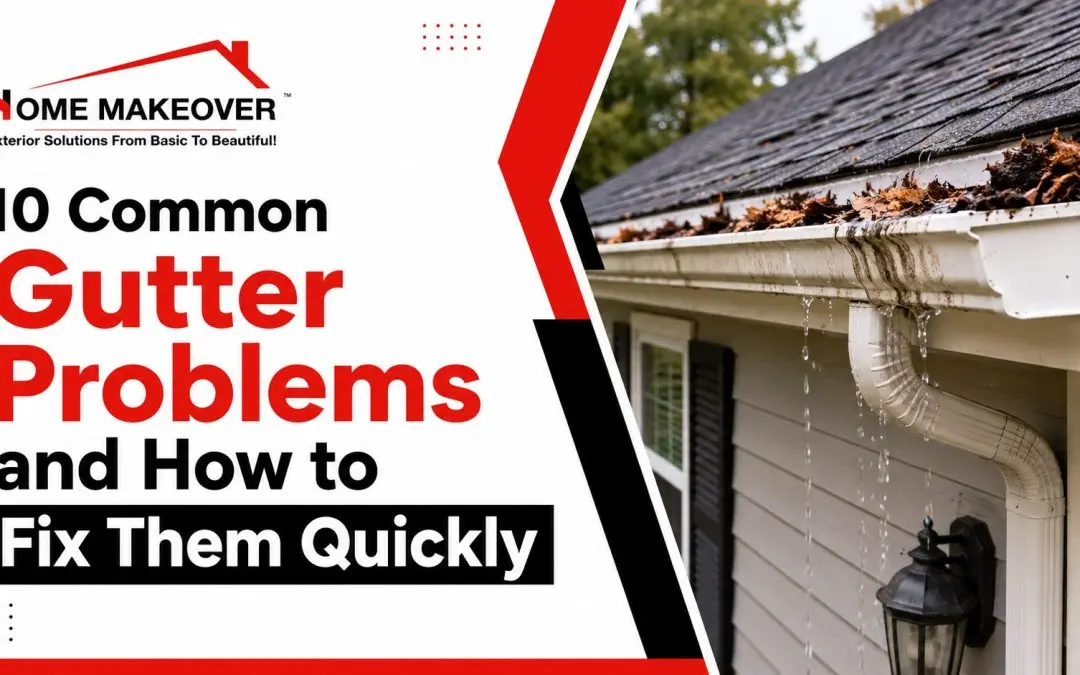
Gutters help channel rainfall off the roof and away from the structure, protecting your siding, basement, and home’s base. But when something goes wrong, even a minor issue can turn into costly damage. Understanding and addressing common gutter problems early can save you a lot of hassle down the road.
In this post, we’ll walk you through 10 common gutter problems and how to fix each one fast, so your home stays protected year-round.
1. Clogged Gutters
What’s the issue?
Leaves, twigs, dirt, and even bird nests can block your gutters, stopping water from flowing properly. This can cause water to spill over, potentially harming the roofing, exterior surfaces, or the home’s structural base.
Quick fix:
Clear out the leaves and buildup using a hand tool or protective gloves, then flush the gutter system using a standard outdoor hose. Installing mesh gutter guards can help reduce future clogs.
2. Sagging Gutters
What’s the issue?
When gutters fill with debris or water, they get heavy. Eventually, they can droop or detach from the exterior of the home.
Quick fix:
Tighten or replace the gutter hangers and ensure they’re spaced correctly (every 2–3 feet). Remove any debris to keep the weight down.
3. Leaky Seams and Cracks
What’s the issue?
Water dripping from seams or joints usually indicates a leak. Over time, weather and wear can cause gaps and small cracks.
Quick fix:
Apply a waterproof gutter sealant along the seams after cleaning and drying the area. For bigger cracks, use a patch kit or replace the damaged section.
4. Improper Slope
What’s the issue?
If your gutters are not angled correctly, water will pool rather than flow to the downspouts, which can lead to overflowing and eventual damage.
Quick fix:
The proper slope is about 1/4 inch for every 10 feet toward the downspout. Adjust the hangers to correct the pitch and ensure a steady flow.
5. Loose or Detached Downspouts
What’s the issue?
Downspouts carry water away from your home. If they come loose or disconnect, water may collect near your foundation and cause erosion or leaks.
Quick fix:
Reattach or replace the brackets holding the downspout in place. Add a downspout extension to redirect water at least 4 feet from the base of your home.
6. Rust and Corrosion
What’s the issue?
Metal gutters, especially older ones, can rust and corrode over time, leading to holes and weak spots.
Quick fix:
Scrub away the rust with a wire brush and treat the area with a rust-inhibiting primer and paint. If the rust is severe, replace that gutter section with a rust-resistant material like aluminum.
7. Overflow During Heavy Rain
What’s the issue?
Even if your gutters are clean, heavy rainfall might overwhelm them, especially if the system is too small or poorly designed.
Quick fix:
Ensure your gutters and downspouts are large enough to handle your region’s typical rainfall. Adding extra downspouts or switching to wider gutters may help.
8. Pests and Insects
What’s the issue?
Stagnant water and debris attract mosquitoes, ants, birds, and even rodents. These pests can nest inside your gutters and cause blockages or other issues.
Quick fix:
Make it a habit to clear the gutters and add mesh shields or covers to stop pests from nesting inside. Make sure there’s no standing water left in the gutter system after rain.
9. Ice Dams in Winter
What’s the issue?
In colder climates, snow can melt off the roof and refreeze in the gutters, creating ice dams that prevent water from draining.
Quick fix:
Use a roof rake to clear snow from the edges of your roof after a storm. Installing heat cables along the gutter can also prevent ice from forming.
10. Water Damage to Fascia Boards
What’s the issue?
When gutters drip or spill over, moisture can seep into the wooden trim behind them, eventually resulting in decay and mildew growth.
Quick fix:
Replace any rotted fascia boards and make sure your gutters are clean, properly sealed, and securely fastened. Seal or paint the fascia to help protect it from future damage.
FAQs
Why are my gutters overflowing even though they are clean?
Clean gutters can still overflow when the downspout is partially blocked, the gutter pitch is incorrect, the system is undersized, or roof valleys send too much water into one area. Overflow during heavy New Jersey rain often signals a drainage or capacity problem rather than debris alone.
How Frequently Should You Clean Your Gutters in New Jersey?
Most New Jersey homes should have gutters cleaned at least twice a year, typically in late spring and late fall. Homes surrounded by mature trees may need additional cleaning, especially after seed drop, leaf fall, high winds, or major storms that can quickly refill gutters and downspouts.
Can clogged gutters cause roof leaks?
Yes. When gutters or downspouts are blocked, water can back up along the roof edge and remain against fascia, flashing, or shingles. During heavy rain or winter freeze and thaw cycles, that trapped moisture can contribute to roof leaks, wood rot, and damaged soffits.
Can clogged gutters damage my foundation or cause basement leaks?
Yes. Overflowing gutters can discharge large amounts of roof runoff beside the house instead of carrying it away. Repeated soil saturation can increase moisture pressure against foundation walls, contribute to erosion, and make basement or crawlspace water intrusion more likely, especially during prolonged New Jersey storms.
Should You Add Gutter Guards to Your New Jersey Home?
Gutter guards can be useful for New Jersey homes surrounded by trees because they reduce leaves and larger debris entering the system. They do not make gutter maintenance-free. Guards still need periodic inspection and cleaning, and poorly selected or clogged guards can contribute to overflow during heavy rain.
How Far Away Should Downspouts Direct water?
Downspouts should discharge far enough from the foundation that roof runoff does not collect beside the house. A common practical target is at least four to six feet, with greater distance helpful where drainage is poor. The final setup should also direct water toward positive grading and safe drainage.
How do I know if my gutters need to be replaced?
Replacement becomes more appropriate when gutters have widespread rust, repeated leaks, large cracks, persistent sagging, failing fasteners, or multiple sections pulling away from the fascia. A small isolated leak or loose hanger may be repairable, but repeated failures across the system usually justify replacement.
Do I need a permit to replace gutters in New Jersey?
For standard exterior gutters and leaders, New Jersey generally classifies repair, replacement, and installation as ordinary maintenance, so a construction permit is typically not required. Projects involving structural changes, internal drainage, historic review, or other related work may have additional requirements, so confirm with your local construction office.
Does homeowners insurance cover gutter damage?
Homeowners insurance may cover gutter repair or replacement when damage results from a covered event such as a windstorm or falling tree limb. It generally does not cover deterioration caused by age, corrosion, neglected maintenance, or ordinary wear. Coverage depends on the policy, cause of loss, deductible, and exclusions.
How can I prevent ice dams from damaging my gutters in winter?
Keep gutters and downspouts clear before winter, but remember that ice dams often begin with uneven roof temperatures caused by heat escaping into the attic. Improving air sealing, insulation, and ventilation can reduce repeated ice formation. Avoid chipping ice from gutters because that can damage roofing and metal components.
Final Thoughts
Gutter maintenance might not be the most exciting task, but keeping your gutter system in good shape can prevent thousands of dollars in water damage. By recognizing and fixing these common gutter problems early, you can protect your roof, walls, foundation, and landscaping.
If you’d rather not climb a ladder or deal with the mess, it’s smart to call a professional. For fast, reliable gutter repair or replacement, the best thing you can do is reach out to Home Makeover LLC – your go-to experts for keeping your home safe and storm-ready.

About the Author: Jeffrey W. Nero
Jeffrey W. Nero is a home improvement expert with over 20 years of experience serving homeowners in New Jersey. As the owner of Home Makeover™, Jeff combines quality craftsmanship with a deep understanding of local needs. From roofing and siding to deck remodels, Jeff has helped thousands of homeowners bring their visions to life. His commitment to excellence and customer satisfaction makes him a trusted partner in transforming homes across Central NJ.